

Data center & mission-critical
Safety observers for data center and mission-critical construction
NSC Enterprises provides safety observers for data center and mission-critical construction, familiar with core and shell, whitespace, ceilings, raised floor and work near energized systems. Observers watch the work, document conditions and report to your designated representatives. Coverage is available nationwide.
Environments
Where our observers work
Core & shell
Structure, envelope and the early trades: openings, leading edges, lifts and deliveries moving through an active site.
Whitespace
Fit-out of the data halls, with containment, cabinets, cable tray and many trades sharing the same rooms.
Ceilings
Above-ceiling and overhead work from lifts and ladders, with drop zones and the people working below.
Raised floor
Open floor tiles, pedestal work and the trip and fall exposures that come with them.
Near energized systems
Work in and around live electrical rooms and equipment, where access boundaries matter most.
What we watch for
The exposures that come with fast, dense fit-out
Stacked trades
- Several trades working the same room or corridor at once
- Work above other crews, and drop zones that drift as work moves
- Deliveries and material staging through finished or occupied space
Lifts in tight rooms
- MEWP travel near open floor tiles, containment and cabinets
- Overhead clearances around cable tray, ductwork and lighting
- Tie-off and pre-use inspection practice where your program requires it
Raised floor
- Open tiles guarded or covered while crews work below the floor
- Tiles replaced before lifts, carts or foot traffic pass
- Pedestal and under-floor work kept inside its boundary
Schedule pressure
- Tasks starting before pre-task planning is complete
- Shift changes and new crews arriving mid-phase
- Housekeeping and egress as finishes go in

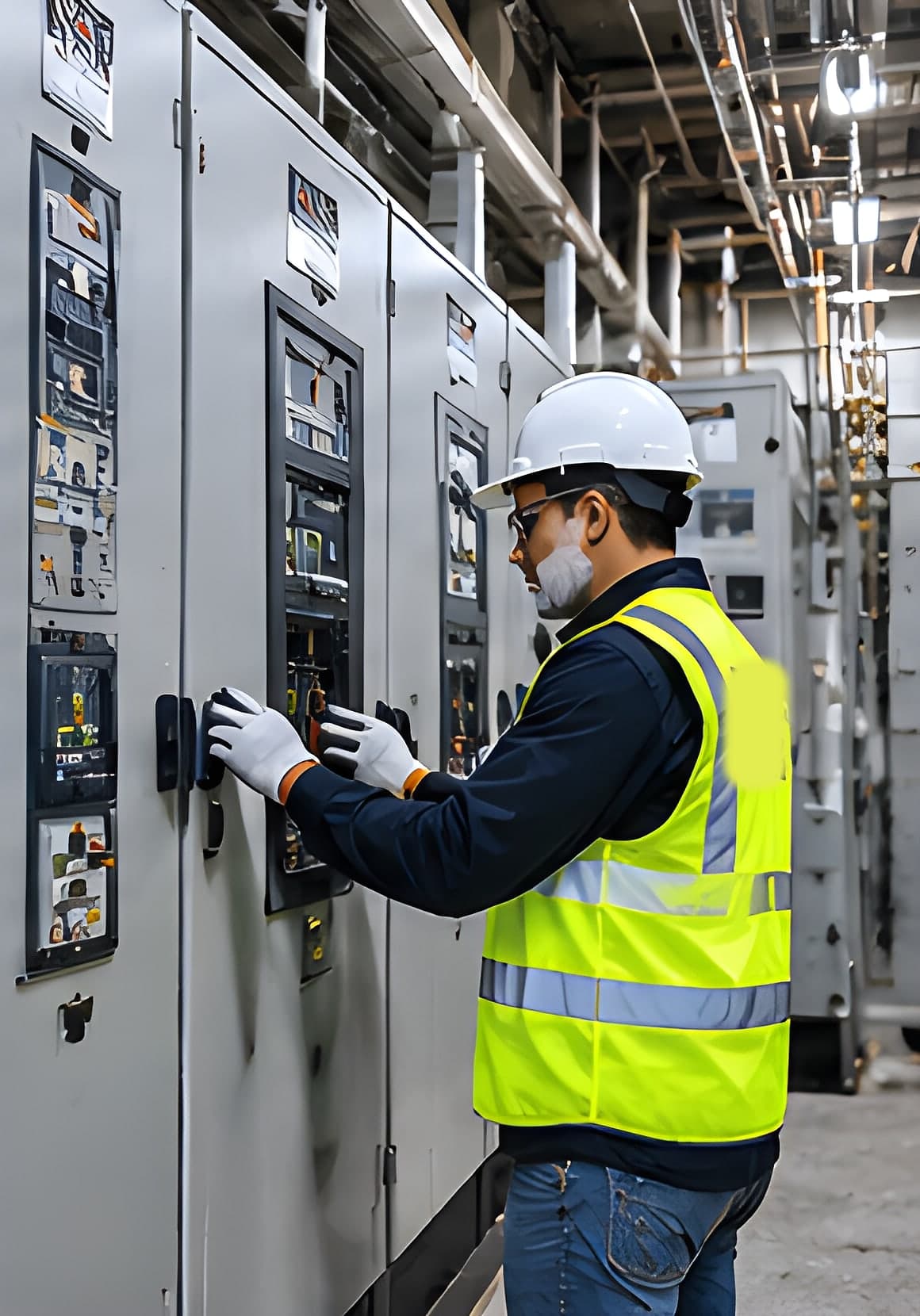
Work near energized systems
Boundaries only protect people while they stay in place
Source: [1]
- Access boundaries at electrical rooms and live equipment kept in place
- Barriers moved for deliveries noticed and reported until they are put back
- Lifts and ladders working near energized gear observed against your program's controls
- Imminent hazards escalated immediately to your designated representatives
Observers watch and report. They do not perform electrical work or act as an energized-work attendant unless your program assigns and qualifies them for that role.
Service area
Where we work
The rules depend on the state. Some states run their own OSHA-approved State Plans: Iowa, for example, through Iowa OSHA, part of the Iowa Division of Labor Services. Others, such as Georgia, fall under federal OSHA for the private sector. Observers report against the rules that apply where your site is.[4][5]
Lifts and falls drive much of the exposure in fit-out. Federal OSHA requires daily testing of aerial lift controls before use and tie-off in boom-type lifts, and fall protection at unprotected edges 6 feet or more above a lower level.[2][3]
Our Atlanta officeCoverage
Staffed to the phase you are in
Scheduled
Set days or set hours on site, on a recurring schedule.
Shift-based
Coverage for specific shifts, including the shifts your own safety staff cannot cover.
Project-based
An observer assigned for a phase or for the duration of the project.
Sources
- [1]OSHA 29 CFR 1926.416, Electrical: general requirements. 1926.416(a)(1): no employee may work close enough to contact an electric power circuit unless protected by de-energizing and grounding it or guarding it effectively.
- [2]OSHA 29 CFR 1926.453, Aerial lifts. 1926.453(b)(2): lift controls tested each day before use; only authorized persons operate an aerial lift; workers in the basket tied off to the boom or basket.
- [3]OSHA 29 CFR 1926.501, Duty to have fall protection. 1926.501(b)(1): an unprotected side or edge 6 feet or more above a lower level must be protected by guardrail systems, safety net systems or personal fall arrest systems. 1926.501(b)(4)(ii): employees must be protected from tripping in or stepping into or through holes by covers.
- [4]OSHA, State Plans. Iowa runs a State Plan covering private and state and local government workplaces; Georgia is not a State Plan state, so federal OSHA covers its private sector. State Plans are monitored by OSHA and must be at least as effective as OSHA.
- [5]OSHA, Iowa State Plan. Iowa OSHA is part of the Iowa Division of Labor Services; the State Plan applies to private sector workplaces in Iowa, with listed exceptions.
Sources read 2026-10-30. Regulations change; check the current text and your contract before relying on any summary here. This page is general information, not legal advice.
FAQ
Data center coverage, answered
Do your observers work in whitespace, ceilings and raised-floor areas?
Yes. Our observers are familiar with interior fit-out environments such as core and shell, whitespace, ceilings, raised floor, and work near energized systems, and they observe the work in each against your program's requirements.
How do observers handle stacked trades and work above others?
They watch drop zones, barricades, material staging and lift travel where trades overlap, and report conditions to your designated representatives. Corrections are assigned and directed by your team.
Can coverage follow the phases of a data center build?
Yes. Coverage can be scheduled, shift-based or project-based, so you can add an observer for a critical phase such as fit-out of the data halls, or carry coverage through the whole project.
Who do observers report to on a data center project?
To the designated representatives you name in writing at kickoff, usually the general contractor's safety lead and project management. Imminent hazards are escalated to them immediately.
Do your observers work near energized electrical equipment?
They observe work in and around electrical rooms and live equipment, watching that access boundaries and barriers stay in place. They do not perform electrical work or act as an energized-work attendant unless your program assigns and qualifies them for that role.
Which regions do you cover for data center work?
Coverage is available nationwide. Tell us the site location and schedule and we will confirm coverage for your project.
Request coverage
Planning a data center build or fit-out?
Share the location, project type, start date and the coverage you need. We will follow up to confirm scope, reporting requirements and schedule.